Why Is Valencia’s “Desencajonada” the Most Famous in Spain?
A Tradition Built on the Magic of the Mediterranean Night.
What makes Valencia’s “desencajonada” so special? The answer lies in its atmosphere.
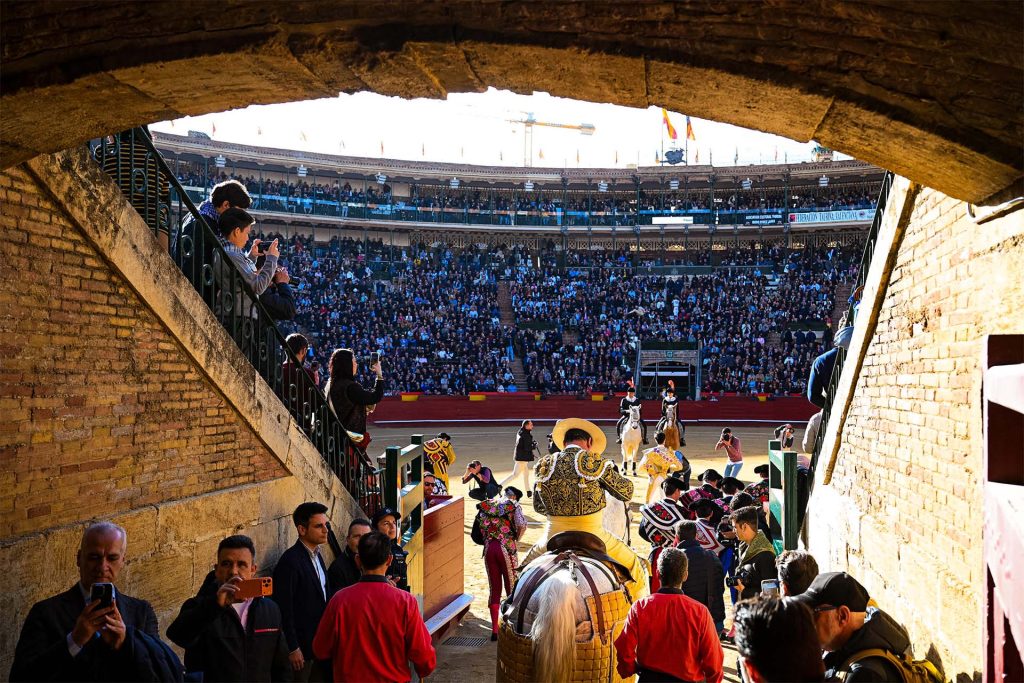
Unlike most bullrings, where the unloading of the bulls takes place privately or with only a handful of spectators, Valencia has transformed this moment into a major public event. Every summer, thousands of people gather inside the Plaza de Toros to witness the official arrival of the fighting bulls that will star in the Feria de Julio.
The event begins after sunset, when the intense Mediterranean heat has eased and the city comes alive. Families, groups of friends, local “peñas” (bullfighting clubs and supporter associations), experienced aficionados and first-time visitors fill the grandstands, creating an atmosphere that is both festive and deeply respectful of tradition.
For many visitors, especially those travelling from abroad, the “desencajonada” offers a unique opportunity to experience the world of Spanish fighting bulls without attending a full bullfight. It is an immersive cultural event that reveals the importance of the “toro bravo” (Spanish fighting bull) long before it enters the arena for the corrida.
Then comes the moment everyone is waiting for.
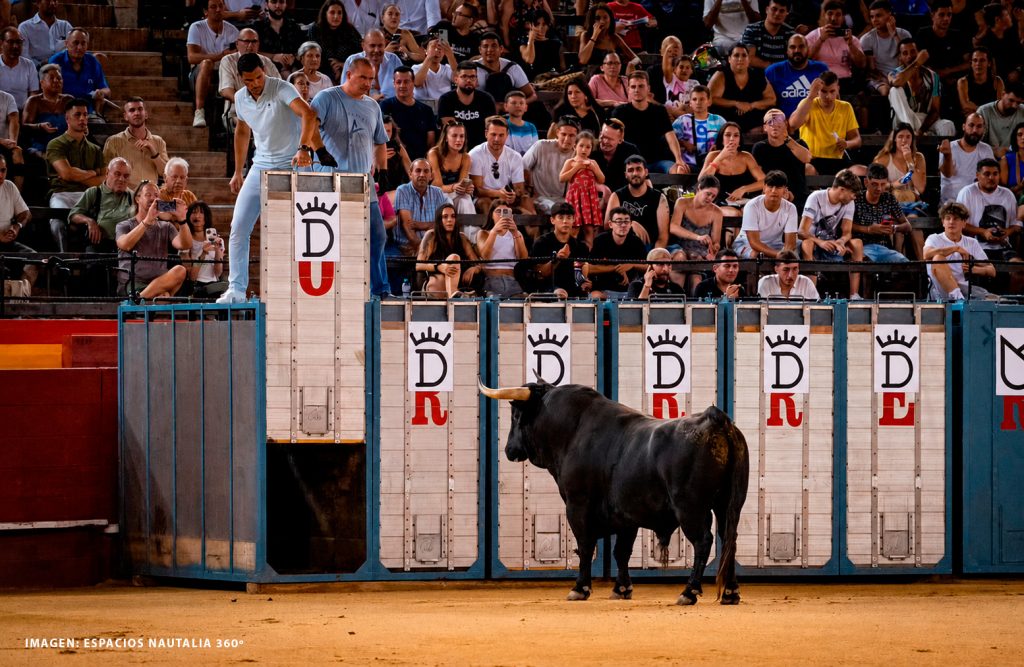
A huge wooden transport crate is carefully positioned in the centre of the “ruedo” (the bullring itself). The noise of the crowd fades away. Silence falls over the arena.
The only sound is the heavy stamping of hooves inside the crate as the bull senses its new surroundings.
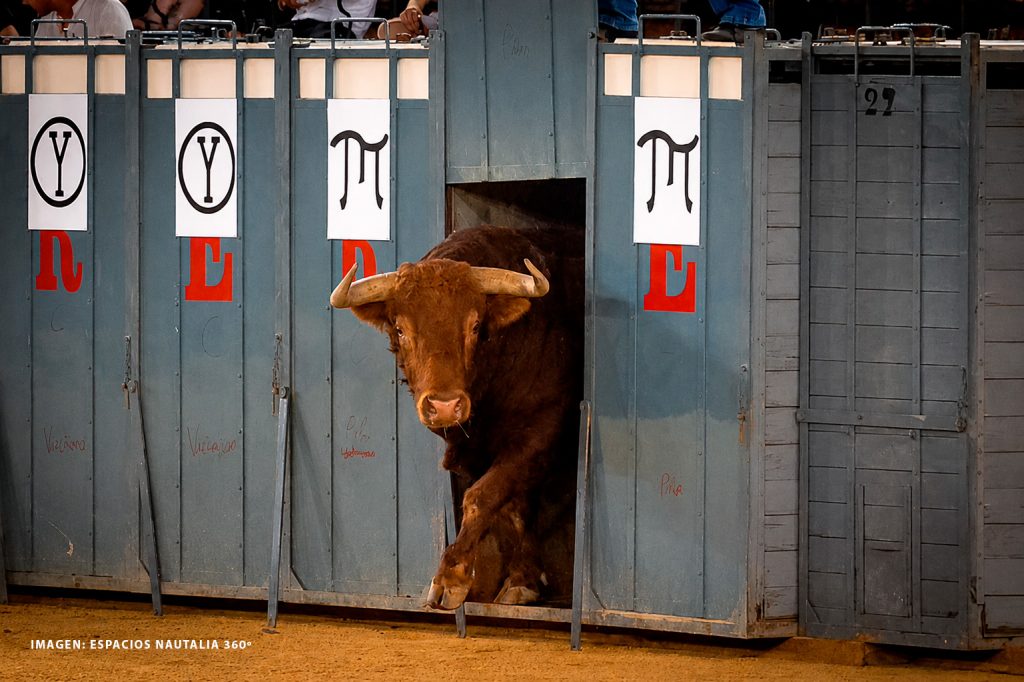
When the gate is finally lifted, the atmosphere changes in an instant.
The bull explodes into the arena, displaying its power, agility and natural instincts for the very first time. Some charge directly into the wooden barriers, others pause proudly in the centre of the ring, while many simply stand for a few seconds, surveying their new surroundings beneath the floodlights.
Every bull reacts differently, and that unpredictability is one of the reasons why no two “desencajonadas” are ever the same.
The audience responds with applause, admiration or excited murmurs as each animal reveals its personality. For experienced aficionados, these first moments offer valuable clues about the bull’s temperament and behaviour. For newcomers, they provide an unforgettable spectacle unlike anything else in the world.
It is this combination of history, emotion, anticipation and authenticity that has made Valencia’s “desencajonada” one of the most celebrated pre-bullfight events in Spain and an essential part of the city’s summer cultural calendar.
The Stories That Have Built the Legend of Valencia’s “Desencajonada”
Beyond its spectacular atmosphere, what truly sets Valencia’s “desencajonada” apart are the unique traditions and unforgettable moments that have become part of its history. Over the decades, the event has produced countless stories that are still remembered by bullfighting enthusiasts today.
The Perfect Harmony of the Oxen (“Bueyes”)
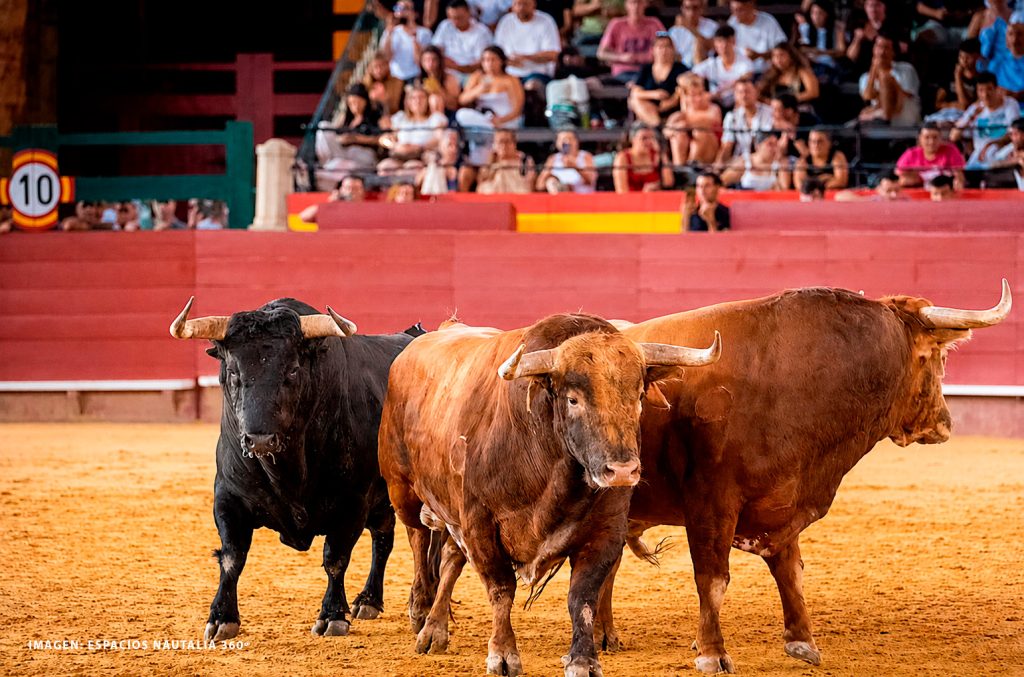
One of the most distinctive features of Valencia’s “desencajonada” is the work of the “cabestros” (trained oxen used to guide fighting bulls).
In many bullrings, the “cabestros” remain waiting inside the “corrales” (holding pens). In Valencia, however, the full team of oxen enters the “ruedo” (the arena) to accompany each newly released bull and calmly guide it towards the “chiqueros” (the pens from which the bulls later enter the bullring for the corrida).
Watching the Valencian stockmen (“pastores”) work alongside these experienced animals is a spectacle in itself. Years of training allow the “cabestros” to move with remarkable precision, helping to calm even the most powerful and unpredictable bulls without unnecessary stress.
For many aficionados, this silent partnership between man and animal is one of the most beautiful moments of the entire evening.
The Legendary Miura That Refused to Leave the Arena
Every great tradition has its legendary stories.
One of the most famous dates back to the 1980s, when a magnificent Miura bull became the undisputed star of the evening.
Instead of following the “cabestros” towards the “chiqueros”, the bull stood defiantly in the middle of the arena, ignoring every attempt to move it.
The experienced oxen circled patiently. The stockmen called and manoeuvred with extraordinary skill. Yet the bull remained motionless, proudly challenging everything around it.
For several tense minutes the event had to be temporarily halted while the team worked carefully to persuade the animal to leave the ring safely.
When the bull finally entered the pens, the crowd erupted into spontaneous applause—an ovation worthy of a great performance in the bullring itself.
Today, the story remains one of the most cherished memories in the history of Valencia’s “desencajonada”.
When Brothers Become Rivals
One of the least expected aspects of the “desencajonada” can also be one of its most dramatic.
After travelling for many hours inside separate transport crates, fighting bulls from the same “ganadería” (breeding ranch) may no longer recognise one another because of the stress and unfamiliar surroundings.
On rare occasions, this has led to spectacular clashes between bulls that have lived together throughout their lives.
These powerful encounters, with the animals locking horns beneath the floodlights, instantly raise the tension inside the arena. The “mayorales” (head stockmen responsible for the bulls) must react immediately, assisted by the “cabestros”, to separate the animals before either is injured ahead of the bullfight.
Although such incidents are uncommon, they perfectly illustrate the strength, instinct and unpredictable nature of the “toro bravo” (Spanish fighting bull), reminding everyone in attendance that these magnificent animals remain wild until the very moment they enter the ring.
These unforgettable moments are part of what has made Valencia’s “desencajonada” legendary among bullfighting enthusiasts and an experience unlike any other in the world.
The “Desencajonada”: The Event That Connects the Countryside with the Bullring
The “desencajonada” of Valencia’s Feria de Julio is far more than a practical operation. It is the symbolic bridge between the “campo bravo” (the open countryside where fighting bulls are bred) and one of Spain’s most historic bullrings.
It is the moment when the bulls complete the final stage of their journey from the “dehesa” (the natural pastureland where they have lived for four or five years) to the arena where they will become the protagonists of the corrida.
For international visitors, the “desencajonada” offers an exceptional opportunity to discover an authentic part of Spanish culture that few tourists ever experience. Unlike a bullfight, this event focuses entirely on the arrival of the bulls and the traditions surrounding them, allowing spectators to observe these magnificent animals at close quarters before the official festivities begin.
The combination of history, tradition, anticipation and spectacle makes the “desencajonada” one of the most distinctive events in the Spanish bullfighting calendar.
Whether you are an experienced aficionado or attending a bullring for the very first time, witnessing the opening of the wooden crates, the silence that fills the arena, the first appearance of each fighting bull and the expert work of the “cabestros” creates an unforgettable experience.
In Valencia, the celebration begins long before the first “paseíllo” (the ceremonial parade before a bullfight).
It begins the very moment the first bull sets foot in the arena.
Experience Valencia’s Legendary “Desencajonada”
Don’t miss one of the most unique traditions in Spanish bullfighting.
Witness the arrival of the fighting bulls, experience the atmosphere inside Valencia’s historic Plaza de Toros and discover why thousands of spectators attend this extraordinary event every summer.
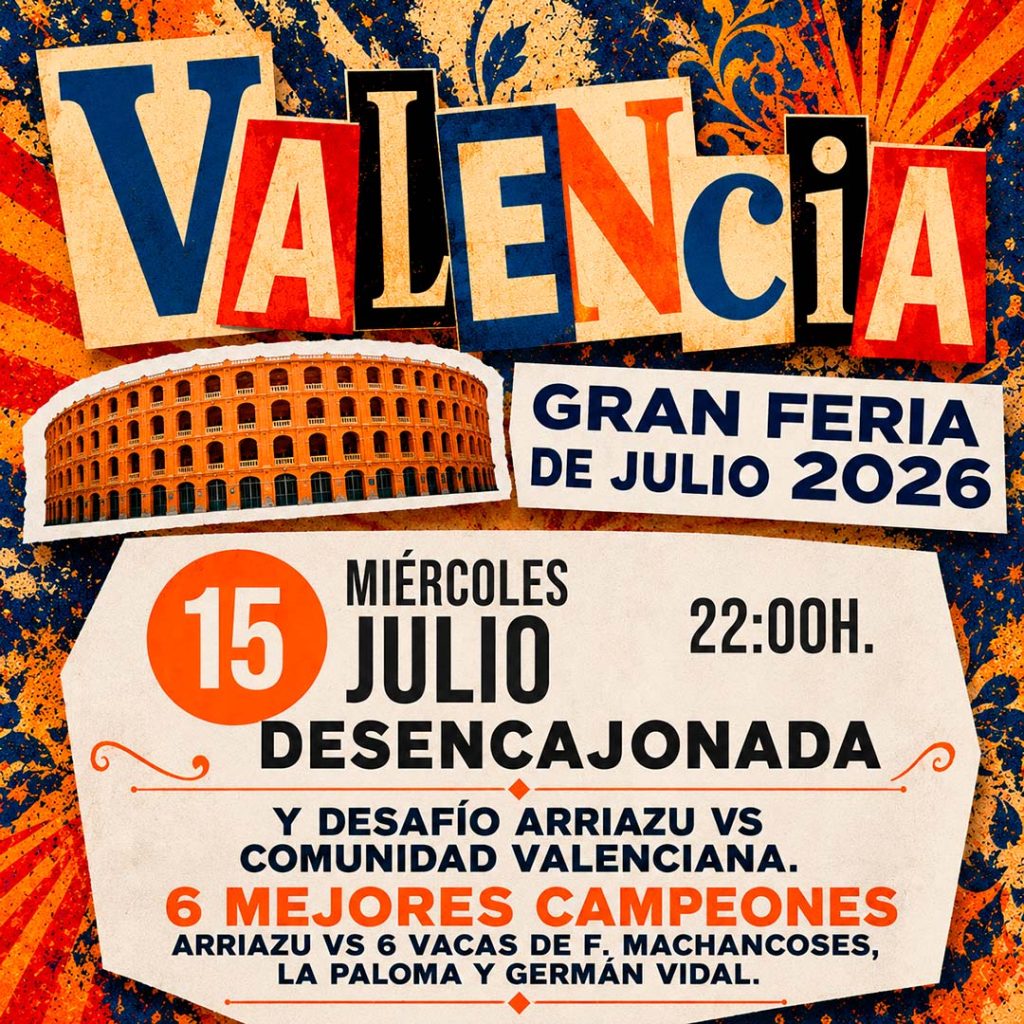
Book your tickets for the “Desencajonada” of Valencia’s July Fair and experience the opening chapter of one of Spain’s greatest bullfighting festivals.