La desencajonada is the main event around which the Feria de Julio in Valencia revolves. For many years it was the city’s principal season ticket event, until the late 1970s and early 1980s, when the Fallas festival began to take centre stage. Its origins, which go back more than a century, are linked to the surroundings of the old bullring, where the most impatient aficionados would gather to watch the cattle that were to be fought, waiting by the river until dusk before crossing the city.
With the arrival of the railway, the bulls no longer made this journey on foot, but aficionados did not lose the habit of making their pilgrimage to the bullring. Entrepreneurs, aware of the strong public appeal of this event, decided to capitalise on it. Spectators then adopted the custom of dining inside the bullring while waiting for the spectacle to begin. Similar events with comparable origins can be found in places such as Salamanca, Colmenar Viejo or Azpeitia, but none have the deep-rooted tradition of the one held every year around Saint James’s Day (San Jaime) in the city of Valencia.
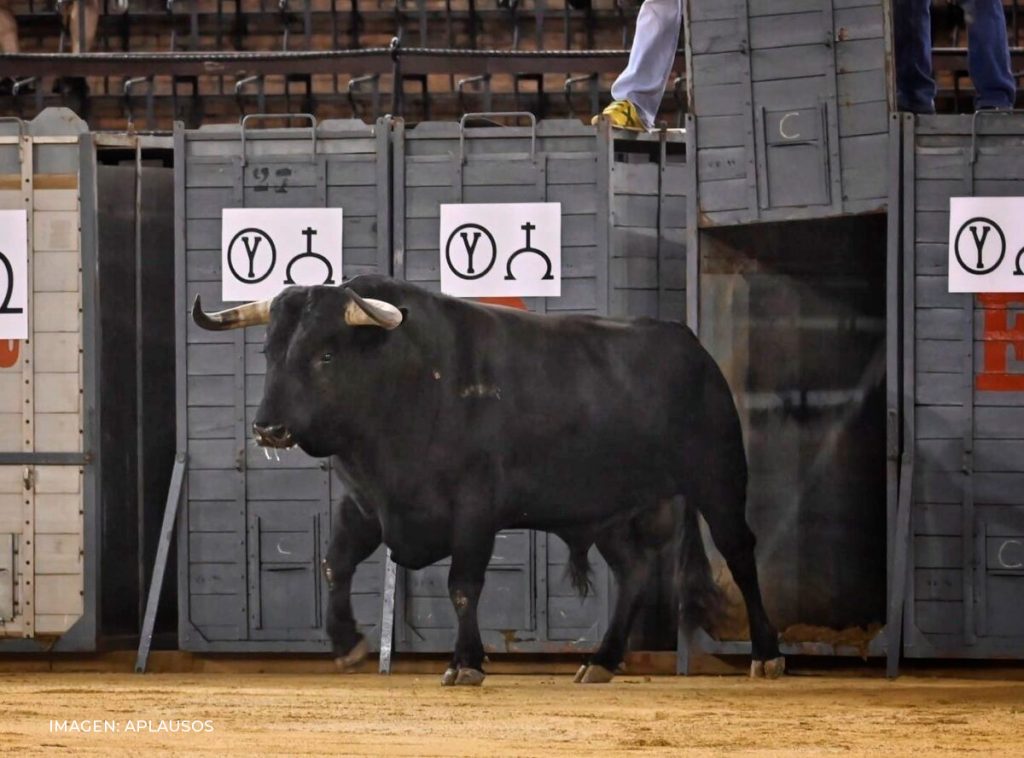
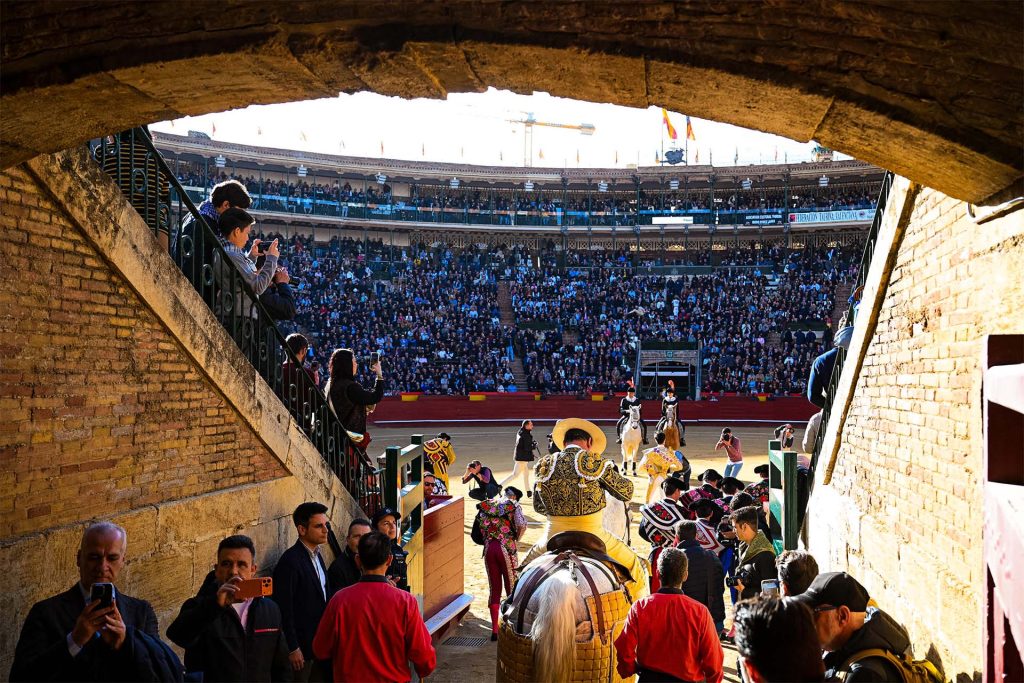
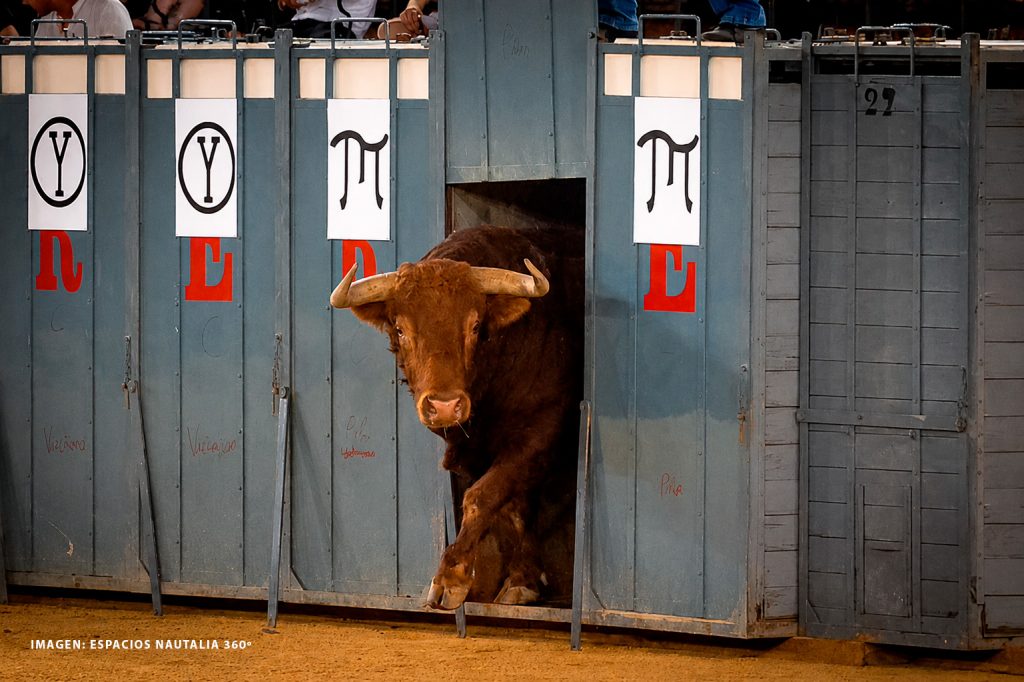
The event usually begins around ten o’clock in the evening, although preparations start several hours earlier. With surgical precision, and assisted by a crane, the wooden crates containing the bulls are placed in front of the puerta de toriles (the gate through which the bulls will emerge on the day of the bullfight). When the cabestrero of the bullring (the handler in charge of the lead oxen) gives the signal, the staff release the bulls one by one.
The role of the cabestrero, a task usually carried out by the mayoral (the head stockman of the bullring), is to prevent fights between the bulls and, above all, to ensure that the bulls already in the arena are not facing the crates when the next one is opened. If two bulls were to collide head-on, the force and violence of the impact could be fatal. For this reason, it is essential to wait until the bulls already released are properly escorted by the cabestros (trained lead oxen) before giving the order to open the next crate.
As soon as the bulls enter the arena, aficionados begin analysing them in terms of type and conformation, while discussing and making predictions about how they will behave during the bullfight. Many of these spectators come from towns and villages around the city, areas with a strong tradition of Bous al Carrer (street bull events), both within the province of Valencia and in neighbouring Castellón.
Once the six bulls from the same ganadería (breeding ranch) are in the arena, the mayoral proceeds to guide them into the holding pens with the help of the parada de cabestros (a group of usually six to eight highly trained oxen). Their task is first to group the bulls together and then to lead them calmly into the pens, which are well designed and perfectly equipped for this purpose.